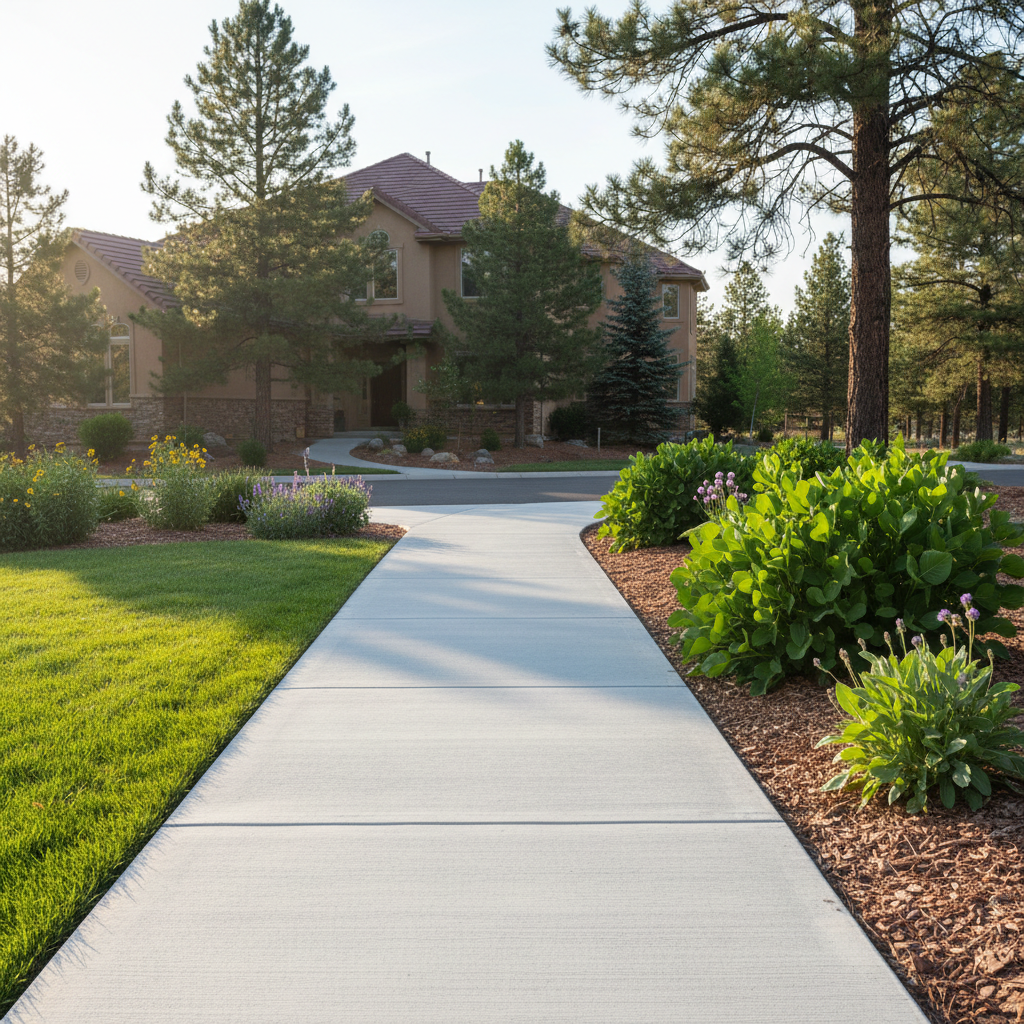
Thinking about putting in a new concrete sidewalk or replacing an old one around your Flagstaff home? That's a smart move, really. Good sidewalks aren't just about making your place look nice; they're about keeping things safe and working well. But I've seen plenty of folks make some pretty basic mistakes that turn what should be a straightforward project into a real headache. Let's talk about what to watch out for so you don't end up regretting your choices.
Mistake #1: Skimping on the Prep Work
This is probably the biggest one, hands down. People see a flat surface and think, "Just pour the concrete!" Nope. Not in Flagstaff, especially with our freeze-thaw cycles and those soils that can be rocky one minute and expansive clay the next. A solid base is everything. If your contractor isn't talking about digging things out properly, compacting the subgrade, and laying down a good aggregate base (like crushed gravel), that's a huge red flag. You need at least four inches of compacted base for a residential sidewalk, sometimes more, depending on the soil and how much foot traffic you expect. Without it, you're just setting yourself up for cracking, heaving, and sinking. It's not a matter of if, but when.
Mistake #2: Ignoring Drainage (Especially Here)
Water is concrete's worst enemy if you don't manage it right. You absolutely have to think about where rainwater and snowmelt are going to go. I see sidewalks poured flat, or even worse, sloping right towards the house foundation. That's just a recipe for disaster. Your sidewalk needs a slight slope, usually about 1/4 inch per foot, angled away from any structures. This is super critical in Flagstaff. We get heavy snow, remember? When that snow melts, you don't want it pooling on your sidewalk or, God forbid, against your foundation. Good drainage prevents erosion, cuts down on ice hazards in winter, and protects your home's structural integrity. Ask your contractor how they plan to handle water runoff. If they shrug, well, find someone else.
Mistake #3: Not Understanding Control Joints
Concrete cracks. It's a fact of life, like taxes. But you *can* control where it cracks. That's what control joints are for. These are those saw cuts or grooves you see in sidewalks. They're not just decorative; they're engineered to create weak points in the slab. So, when the concrete expands and contracts with temperature changes (and we get a lot of those here, from hot summer days to freezing winter nights), it cracks neatly along those lines instead of randomly across your beautiful new sidewalk. I've actually seen homeowners tell contractors to skip them because they don't like the look. Big mistake. You need them, and they need to be spaced correctly – typically every 4-5 feet for a 4-inch thick slab. If a contractor isn't planning for them, or tries to talk you out of them, they really don't know what they're doing.
Mistake #4: Hiring the Cheapest Bid Without Asking Questions
Look, everyone wants a good deal. I totally get it. But with concrete, the cheapest bid often means corners are being cut. That might mean less prep work, cheaper materials, or inexperienced labor. When you're getting quotes, don't just stare at the bottom line. Ask detailed questions: What kind of base will they use? How thick will the concrete be? What PSI concrete mix are they using? (For sidewalks, you want at least 3500 PSI, sometimes 4000 PSI for driveways or high-traffic areas.) Will they include rebar or mesh for reinforcement? (Absolutely essential for our climate, by the way.) Are they licensed and insured? Can they provide references? A reputable company like Flagstaff Concrete Group will be happy to answer all these questions and explain their process. If a contractor is vague or pushy, that's a major red flag.
Mistake #5: Forgetting About Reinforcement
This ties into the previous point, but it's so important it deserves its own mention. Concrete is strong when you push on it, but not so much when you pull it apart. That's where reinforcement comes in. Whether it's steel rebar or wire mesh, some form of reinforcement is crucial to hold the concrete together and prevent wide, unsightly cracks, especially with our expansive soils and temperature fluctuations. I've seen plenty of sidewalks fail prematurely because someone thought they could save a few bucks by skipping the rebar. Don't do it. It's a small cost upfront that pays huge dividends in longevity.
Mistake #6: Not Getting It in Writing
This seems obvious, but you'd be surprised how often it happens. Always, always get a detailed contract. It should spell out everything: the scope of work, materials to be used (type of concrete, thickness, reinforcement, base material), drainage plan, control joint spacing, timeline, total cost, and payment schedule. Any reputable contractor will provide one, no problem. This protects both you and them. If there's a disagreement down the line, you have something solid to refer back to. Without a clear contract, you're just relying on verbal agreements, and those can get fuzzy fast.
A concrete sidewalk is an investment in your home. Do your homework, ask the right questions, and don't be afraid to walk away from a contractor who can't or won't provide clear answers. You'll be much happier with the result, trust me.