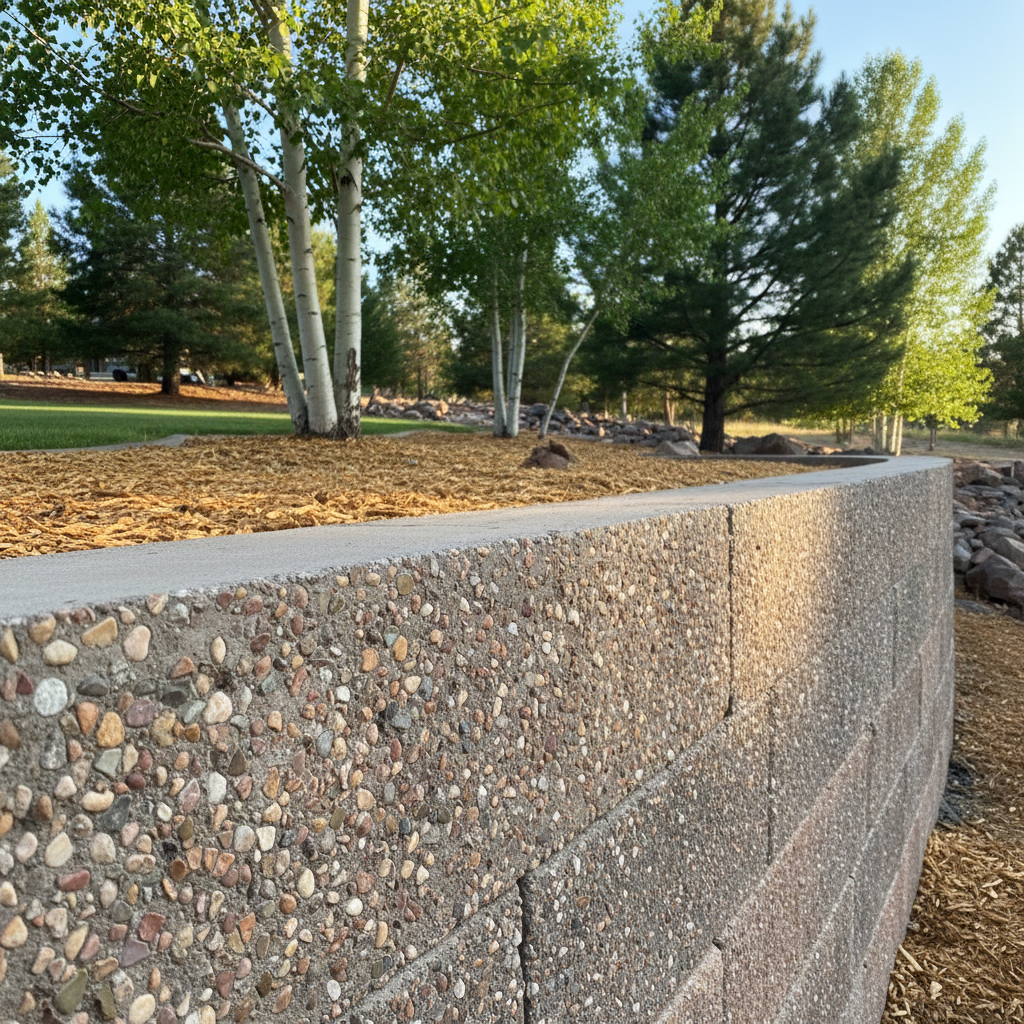
So, you're eyeing a retaining wall, huh? Maybe your yard's on a slope, or you're trying to carve out some flat, usable space. Whatever the reason, concrete retaining walls are a solid choice, and believe me, I get a ton of questions about them here at Flagstaff Concrete Group. Let's dig into what you really need to know.
What's the real difference between a concrete block wall and a poured concrete wall?
This is probably the question I hear most often. You see block walls everywhere, right? They're often called segmental retaining walls (SRWs) and they're made from interlocking concrete blocks. They're pretty flexible for smaller jobs, maybe three or four feet high, and they can look nice. But they aren't always the strongest choice, especially if there's a lot of weight behind them or you're dealing with a really tall slope.
Poured concrete walls, though, are a whole different animal. We build a form, pour concrete into it, and usually reinforce it with rebar. These are monolithic structures — one solid piece. They're much stronger, last longer, and can handle way bigger loads and heights. For anything over four feet, or if you're dealing with heavy soil pressure, a poured wall is almost always what I'd recommend. They also shift or settle less over time, which is a huge deal with our freeze-thaw cycles right here in Flagstaff.
How much does a concrete retaining wall cost in Flagstaff?
Ah, the million-dollar question. And like most things in construction, it's not a simple answer. For a poured concrete wall, you're generally looking at a higher upfront cost per linear foot compared to a block wall. Why? More labor for forming, more concrete, and often more rebar. You've also got to think about excavation, drainage, and backfill.
Block walls might start around $30-$60 per square foot of wall face, while poured concrete can run anywhere from $50 to $100+ per square foot. That depends on height, thickness, how easy it is to get to the site, and the reinforcement needed. A really tall, heavily reinforced wall on a steep slope will naturally cost more than a short, decorative one. The best way to get an accurate number? Have us come out and take a look at your specific site. We can give you a solid estimate once we understand the scope.
Do I need a permit for my retaining wall project?
Absolutely, yes, you almost certainly will. In Flagstaff and Coconino County, any retaining wall over four feet tall — measured from the bottom of the footing to the top of the wall — typically needs a building permit. Even if it's less than four feet, if it's holding up a structure or has a significant load, you might still need one. This isn't just red tape; it's about safety. Walls need to be engineered correctly to prevent failure, and that can be dangerous and incredibly expensive to fix.
Getting a permit means plans get reviewed, and inspections happen during construction. It makes sure the wall is built to code and will stand up to local conditions, including our heavy snow loads and sometimes unstable soils. Don't skip this step; it'll save you headaches down the road, trust me.
What about drainage? Is that really that important?
Crucial. Non-negotiable. If you don't manage the water behind a retaining wall, you're just asking for trouble. Water is heavy, and hydrostatic pressure can build up behind the wall, pushing it over or causing it to crack. It's like a ticking time bomb.
A good retaining wall system includes several drainage components: a layer of gravel or crushed stone right behind the wall, a perforated drain pipe (often called a French drain or weeping tile) at the base, and weep holes or outlets to let that water escape. We'll also often use a geotextile fabric to keep soil from clogging the gravel and pipe. Proper drainage relieves that pressure, keeping your wall stable and making it last significantly longer. It's not an add-on; it's part of the wall's structural integrity.
How long does a concrete retaining wall last?
A properly designed and built poured concrete retaining wall, with good drainage and the right reinforcement, can last 50 to 100 years, maybe even longer. Just think about some of the old concrete structures you see around. Concrete is incredibly durable when it's done right. Block walls might have a shorter lifespan, perhaps 30-50 years, depending on the block type and how well they were installed.
The biggest factors affecting how long it lasts are the quality of the initial build, the soil conditions, and how well drainage is maintained over time. If you skimp on any of these, you'll see problems much sooner.
Can I build a retaining wall myself?
For a small, purely decorative block wall under two feet, maybe. But for anything structural, or over a couple of feet high, I strongly advise against it. There's a lot more to it than just stacking blocks or pouring concrete. You need to understand soil mechanics, drainage principles, proper compaction, reinforcement, and local building codes. Mistakes can lead to wall failure, property damage, and even injury.
This isn't a weekend DIY project for most homeowners. You're dealing with serious forces and a significant investment. It's always best to bring in experienced professionals who know what they're doing. We've seen too many DIY attempts fail, and fixing a failed retaining wall is always more expensive and complicated than building it right the first time.
What maintenance does a concrete retaining wall need?
One of the best things about a concrete retaining wall is how little maintenance it usually needs. Once it's in, it's pretty much set. Your main job is to keep an eye on the drainage. Make sure the weep holes or drainage outlets aren't clogged with leaves or debris. If you have plants growing near the wall, keep their roots from getting into the drainage system.
Occasionally, you might want to clean the surface, especially if you have an exposed aggregate or decorative finish. Look for any signs of cracking or shifting, though with a properly built wall, these should be rare. If you do see anything concerning, give us a call. It's always better to address small issues before they become big ones.