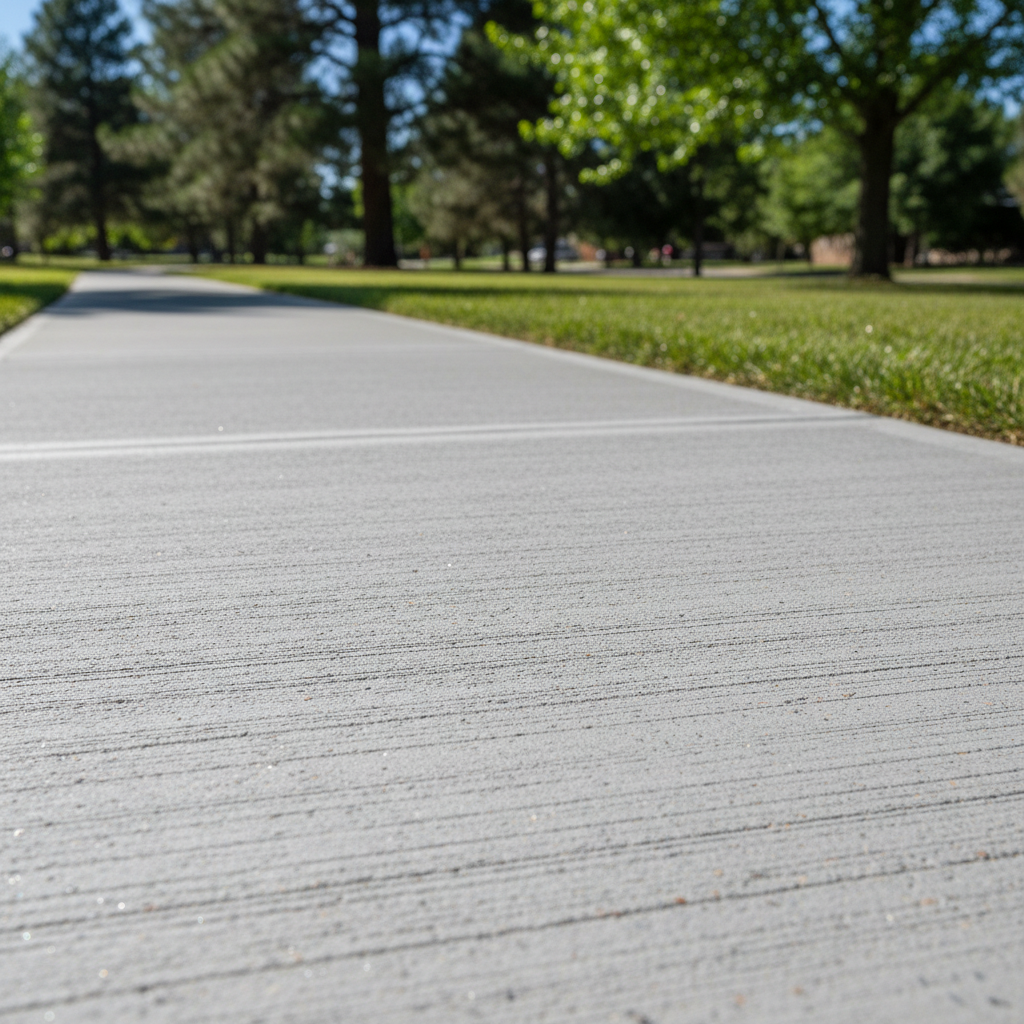
When you live up here at 7,000 feet, standard home maintenance rules rarely apply. Pouring a simple Concrete Sidewalk in neighborhoods like Sunnyside or Pine Del requires a completely different approach than it does down in Phoenix. Flagstaff Concrete Group gets a lot of questions from homeowners trying to figure out how to keep their walkways safe and flat. We will break down the most common things people ask us about a Concrete Sidewalk.
Why does my sidewalk heave or crack every few winters?
You can thank Flagstaff's aggressive freeze-thaw cycles and volcanic soils for that. When moisture gets trapped in the ground underneath your walkway and freezes, it expands. That upward pressure is called frost heave, and it will effortlessly push chunks of concrete higher into the air. If the sub-base was not compacted right or lacked enough crushed aggregate depth, your Concrete Sidewalk will not stand a chance against our winter weather. For homeowners in Flagstaff, Flagstaff Concrete Group makes sure the sub-base is properly prepared.
How thick should a residential sidewalk be poured?
A standard Concrete Sidewalk is typically four inches thick, and that works fine for foot traffic. However, if your walkway crosses a driveway apron or a spot where a delivery truck or heavy snowblower might occasionally roll over the edge, we bump that thickness up to six inches. Adding proper reinforcement wire or rebar makes a massive difference in preventing those random, jagged cracks from taking over your path. Flagstaff Concrete Group provides Concrete Sidewalk services for homes and businesses in Flagstaff.
Can I just patch my uneven sidewalk, or do I need a full replacement?
It depends entirely on how bad the damage is. If you have a minor hairline crack or a tiny surface chip, a heavy-duty polymer-modified patch will buy you some time. But if a slab has tilted dangerously or heaved three inches higher than the neighboring piece, patching is just a temporary fix. Once concrete breaks its internal bond and shifts out of level, tearing it out and pouring a fresh, properly graded Concrete Sidewalk is usually the smarter long-term option.
How do I keep water from pooling near my foundation?
Grading is everything. Your Concrete Sidewalk should always slope slightly away from your house, usually about a quarter-inch per foot. If a walkway acts like a dam and traps melting snow or summer monsoon water against your exterior wall, you are inviting bigger structural headaches. Whenever we pour a new walkway, we double-check the slope so water flows safely toward the yard or drainage paths instead of pooling where it should not. For Flagstaff homes, Flagstaff Concrete Group is here for all your Concrete Sidewalk needs.
What is the best time of year to pour new concrete?
Late spring through early fall is the sweet spot. We need consistent daytime temperatures above freezing and nights that will not drop low enough to freeze wet concrete before it cures. Pouring in the dead of winter requires expensive thermal blankets, heated water, and chemical accelerators. While we can do it when necessary, waiting for warmer weather gives the Concrete Sidewalk mix a much cleaner, stronger cure.
Who is responsible for the sidewalk running along the front of my property?
Many local homeowners are surprised to learn that city ordinances typically make property owners responsible for maintaining the Concrete Sidewalk running along their frontage. If roots or weather cause a severe trip hazard, the city might flag it, leaving you on the hook for repairs. Keeping an eye on your walkways saves you from liability issues down the road. Call Flagstaff Concrete Group for Concrete Sidewalk work in Flagstaff, AZ.