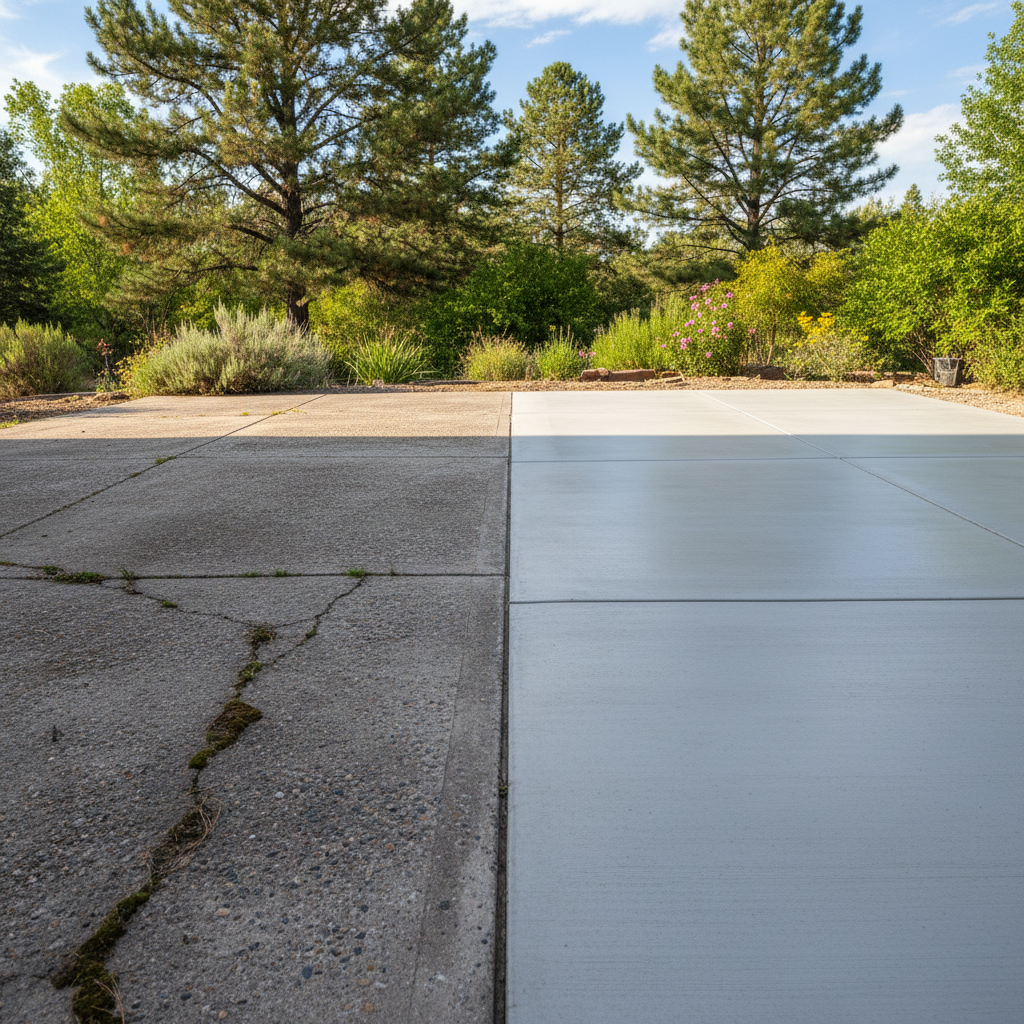
Alright, Flagstaff homeowners, let's talk about concrete. Got a project in mind? Maybe a new driveway, a patio extension, or even just a walkway. You know concrete is tough stuff, but figuring out which kind to use can be tricky. It's not just about color or finish anymore. There's a big decision to make between traditional concrete and something called pervious concrete. I'm here to lay out the real facts on both options, helping you make a smart choice for your place.
Traditional Concrete: Your Go-To Workhorse
When most people picture concrete, they're probably thinking about traditional concrete. It's that solid, non-porous surface made from cement, aggregates (like gravel and sand), and water. This stuff has been the standard for decades, and there's a good reason why.
Cost: Usually Cheaper to Start
Traditional concrete generally costs less upfront. For a basic, broom-finish concrete patio right here in Flagstaff, you're typically looking at $8 to $15 per square foot. Driveways might run you anywhere from $7 to $14 per square foot. The installation process is pretty standard, which helps keep labor costs down.
Durability: Built Tough, But Watch Out For a Few Things
This material is strong. It's made to handle heavy loads and constant traffic. But, here in Flagstaff, we face some unique challenges. Our big temperature swings, especially those freeze-thaw cycles we get in winter, can really put concrete to the test. Water can sneak into tiny cracks, freeze, expand, and then make those cracks even bigger. Plus, our expansive clay soils, common in many areas, can shift and cause issues if the ground underneath isn't prepped just right.
Maintenance: Pretty Simple to Keep Up
Keeping traditional concrete in good shape is usually quite easy: just keep it clean and seal it every so often. Sealing is super important here to protect against those freeze-thaw cycles and prevent stains, because unsealed concrete is porous and soaks up liquids. If cracks do show up, you can often fix them with patching or crack injection, though really widespread damage might mean replacing the whole thing.
Appearance: Flexible, But Can Be a Bit Plain
Traditional concrete has that classic, practical look. You can get it in different colors, and various finishes like broom, smooth, or even exposed aggregate (but that's a whole other topic). It's a clean, solid surface, but without some decorative touches, it might seem a little bland for some folks' tastes.
Pervious Concrete: The Eco-Friendly Option
Pervious concrete, sometimes called porous concrete, is a real game-changer for managing stormwater. It's made with very little or no sand, which creates a network of connected holes that let water pass right through.
Cost: A Bigger Initial Investment
Let's be honest: pervious concrete usually costs more to install upfront than traditional concrete. It can be two or three times more expensive. That's because it needs special mixing, specific placement techniques, and often a thicker pour (around 6 inches compared to 4 inches for traditional). However, it can save you money later by cutting down or even eliminating the need for complicated drainage systems.
Durability: Different Strengths, Different Weaknesses
Pervious concrete is strong enough for most driveways and walkways, but it's generally not as tough as traditional concrete. Its porous nature means it has lower compressive and flexural strength. Here in Flagstaff, while it helps with snowmelt and stops ice from building up by letting water drain away, some sources suggest it might not hold up as well in freeze-thaw conditions. Getting the sub-base ready the right way is absolutely crucial for it to last.
Maintenance: More Work, But with Great Payoffs
Pervious concrete needs more regular upkeep than traditional concrete to keep those pores clear. You'll need to vacuum sweep it often to remove debris and pressure wash it periodically to dislodge any fine particles that get stuck. If the pores clog up, it loses its main benefit, right? But the payoff is huge: no more puddles, fewer slipping hazards in winter, and it helps recharge our groundwater. Pretty neat, huh?
Appearance: Unique and Textured
Because it doesn't have fine aggregates, pervious concrete looks rougher and more textured than traditional concrete. You won't get that smooth, polished look, but it can be quite attractive in its own way, offering a natural, almost aggregate-like finish. It can even let grass grow through, creating a truly unique aesthetic.
My Recommendation for Flagstaff Homeowners
So, which one should you pick for your Flagstaff home?
If you're on a tighter budget and really just need a durable, no-frills surface that can handle cars, traditional concrete is probably your best bet. It's a proven solution, and with proper installation (including fiber reinforcement and the correct expansion joints for our climate) and regular sealing, it'll serve you well for years. We at Flagstaff Concrete Group always use high-strength mixes specifically chosen for our freeze-thaw cycles and altitude, by the way.
However, if you're looking for an environmentally friendly option, especially for areas where drainage is a real concern, or you want to help recharge the groundwater, pervious concrete is definitely worth considering. Think about driveways, patios, or pathways where you want to minimize runoff and prevent standing water. Northern Arizona University right here in Flagstaff even uses pervious concrete in its parking areas, showing it can work well here.
Ultimately, it comes down to what's most important to you, your budget, and the specific needs of your property. Give us a call, and we can come out, look at your site, chat about your goals, and help you figure out the best approach for your Flagstaff concrete project.